Author Archive

Home / Author's Article(s) / David Ballard

6th June 2024. 1:00 PM BST. LONDON, UK: The Delta Group, Europe’s leading visual communications specialist, delivering award-winning multi-channel marketing services to Retailers,FMCG, Film, Entertainment and Outdoor brands, today announced a major milestone in our growth and development with the relocation to a brand-new state-of-the-art production facility in Bishops Stortford, along with establishing a new Agency headquarters in Soho, London.  

This strategic relocation to Bishop’s Stortford and London HQ underscores our dedication to our clients and aims to elevate our working environment, service offerings, foster innovation, and align with our future expansion strategies. Furthermore, this relocation complements our existing operations in four other sites in the UK and Ireland, further enhancing the company’s overall capabilities and reach.

The new office locations have been carefully selected to meet the evolving needs of our business and employees. The Bishop’s Stortford site is netzero carbon construction with a BREEAM “Excellent’ / EPC A rating with a focus on sustainability and environmental performance, such as energy efficiency, use of sustainable materials, water usage, and overall impact on the environment.

Solar PowerThe site will be equipped with solar power that will deliver 60% of our energy needs during daylight hours. Additionally, improved amenities and collaborative spaces to enhance the overall work experience for our staff.

Investment As part of our transition to Bishop’s Stortford and Soho, The Delta Group has invested up to £10 million in world first state-of-the-art equipment. This investment aims to boost production capacity, streamline automation processes, and accelerate time-to-market delivery.

This strategic investment includes the implementation of cutting-edge technologies such as the Nozomi 14000SD, making us the world’s first company to have three Nozomi’s under one roof, Agfa Speedset“Orca’, Indigo 15000, Lamina Packline, and studio editing suites all aimed at maintaining our market-leading standards and driving innovation in our product / service offerings.

Jason Hammond, CEO of The Delta Group said: “Our move to the new Head Office locations in Bishops Stortford and Soho marks an exciting chapter for The Delta Group and more importantly for our clients. This strategic decision underscores our commitment and alignment to our clients ongoing needs around end-to-end services, sustainability, automation, personalisation and cost, with an equal focus on our employee’s well-being. With enhanced facilities at Bishop’s Stortford providing anunmatched production platform, whilst the new office at Soho supports our growing agency and Ferefacquisition, we are poised to accelerate our growth and deliver even greater value to our customers. I am confident that these moves will not only benefit our clients but also provide a dynamic and inspiring environments for our team to thrive and succeed.”

As we embark on this important transition, we express our gratitude to our dedicated employees for their continued hard work, dedication, and enthusiasm. The phased relocation process will be managed carefully to ensure minimal disruption.

This move symbolizes a new era for The Delta Group, and we are excited to take this journey forward together in our new, cutting-edge sustainable office space.

Furthermore, Mike Phillips Executive Chairman of The Delta Group said: “This strategic relocation to our new Head Office locations in Bishops Stortford and Soho represents a pivotal moment for The Delta Group and the clients we serve. By aligning our commitment to sustainability, innovation, efficiency and enhancing our creative offering with our clients’ evolving needs, we are creating environments across all Delta Group sites that drive success. With a focus on enhancing productivity, personalisation, and cost-effectiveness, coupled with a strong emphasis on employee well-being, this move signifies our dedication to excellence in every aspect of our operations. I am confident that the new facilities and market leading production and agency capabilities will not only propel our growth but also foster a culture of innovation among our staff.”

For media inquiries, please contact:

Dean Smith

Chief Sales & Marketing Officer

Dean.smith@thedeltagroup.com

+44 (0) 7957 633652

Notes to Editors:

About The Delta Group www.thedeltagroup.com

Based in London, The Delta Group are Europe’s leading privately owned visual communications specialist, delivering award-winning multi-channel marketing services to the Retail, FMCG, Film, Entertainment, Gaming and OOH markets. With a focus on sustainability our services provide global brands with a powerful combination of end-to-end connected services delivering insight, creativity, production, experiential, distribution and compliance managed through our unique Workstream X technology. 

Our unique portfolio of complimentary connected services:

Shopper Marketing Insights
Agency Services – Creative / Digital / Social & Structural Design
POS Print / OOH production
Digital Screens and Content Management
Events / Experiential
Fulfilment, Warehousing & Distribution
Surveys and Installation
Verification and compliance
Marketing Technology Workflow

In the realm of paediatric and neonatal care, every second counts. The Children’s Air Ambulance (TCAA) stands as a beacon of hope, swiftly transporting critically ill babies and children from one hospital to another for specialised care. With a clinically designed helicopter serving as a flying intensive care unit, TCAA is revolutionising the landscape of emergency medical services for the youngest and most vulnerable patients. Unlike many other essential services, TCAA does not rely on government funding. Instead, it operates solely on the generosity of donations and the dedication of volunteers.

Our Executive Chairman, Mike Phillips, emphasises our shared commitment to making a difference, “As our partnership with the Children’s Air Ambulance grows, so does our dedication to making a difference. At Delta, we believe in the power of community support and are committed to amplifying our impact on the lives of children and families facing medical emergencies. Through our financial contributions, employee volunteer program, and creative expertise, we aim to create a lasting change and support TCAA’s mission of saving lives every day.”

Starzeus Hassan-McGhee, The Delta Group’s Sustainability Director states “ As part of our Delta Net Zero initiative is believing in the power of community support and lending a helping hand to those in need. As part of our commitment to sustainability and social responsibility, we have developed a partnership with the Children’s Air Ambulance. Through this partnership, we aim to make a meaningful impact on the lives of children facing medical emergencies”.

Our involvement with TCAA goes beyond financial contributions, we also have an established employee volunteer program, empowering our team members to participate in fundraising events. By harnessing the collective effort of our workforce, we strive to amplify our support and create lasting change in the communities we serve.

Jo Payne, the National Partnerships Manager at The Children’s Air Ambulance, expresses her gratitude for the collaboration, stating, I am really excited about the partnership with the team at Delta, it’s so diverse and has endless possibilities across many areas of the Charity.  As well as the much-valued financial contributions from Delta and the staff joining in with our challenge events, the creativity and expertise will be transformational for the charity in 2024 and beyond.

Our journey with the Children’s Air Ambulance began in December 2023 with a successful Christmas Raffle that raised over £3,000. Since then, our dedication to supporting TCAA has only grown stronger, throughout 2024 we are planning to partake in a multitude of events to support the Children’s Air Ambulance. Most recently, we donated 2,000 reusable, insulated bottles to their dedicated staffs and volunteers who work tirelessly to save lives every day.


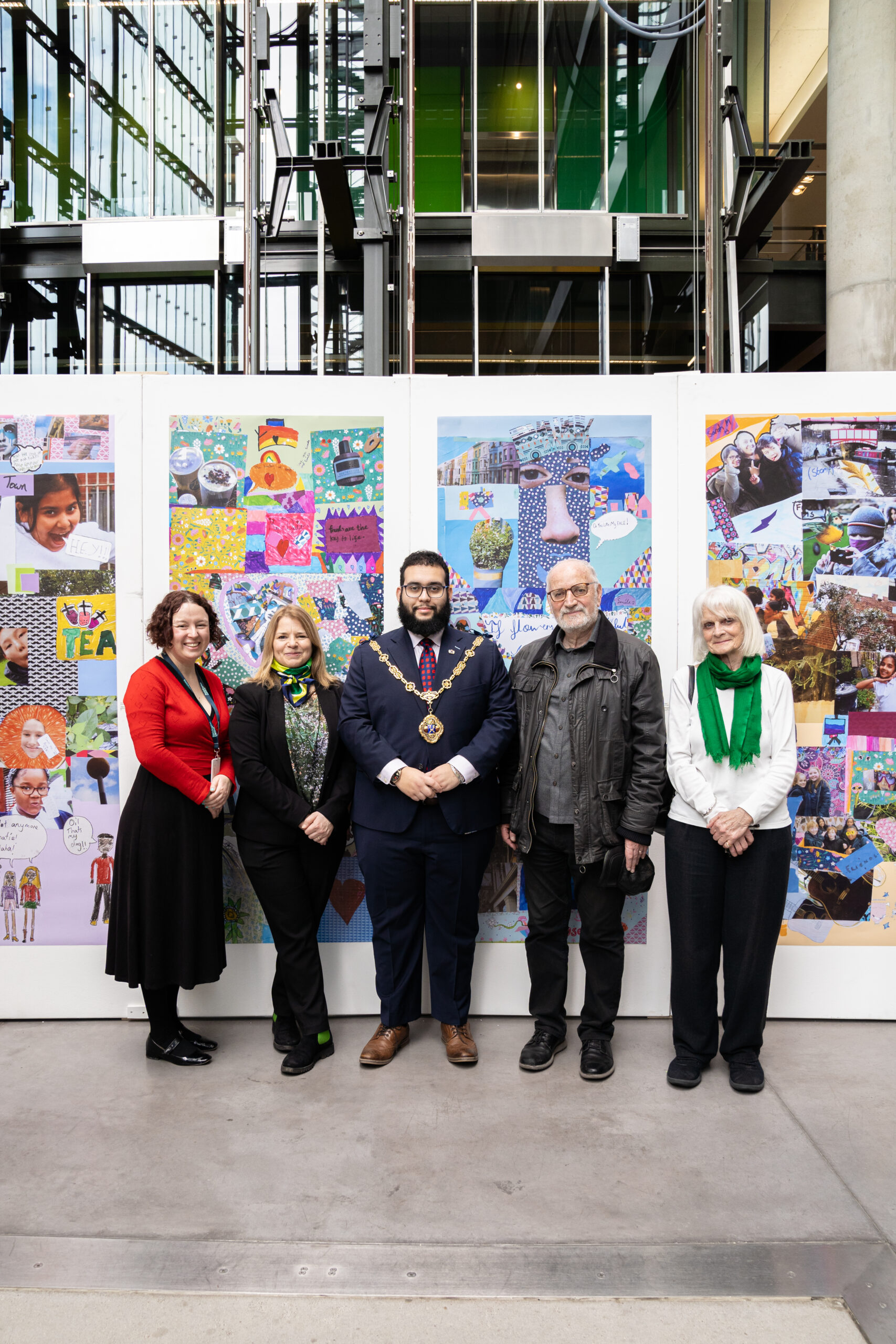
The Delta Group was able to support Paddington Arts in a unique local project in the Paddington area of London recently. British Land campus Paddington Central hosted the finale exhibition. Local art organisation Paddington Arts worked with three local Primary Schools and introduced over 300 children aged 9 to 11 to the world of photography and collage. The project aimed to encourage children to explore their environment and gain inspiration from people, places, and nature.


As part of the project, the children went on a photowalk in the surrounding area, taking pictures based on shapes and colours chosen by each group. They then selected their favourite photographs and used mixed media to create individual and group collages.


Artist Gail Astbury curated the exhibition, using the collages to create giant printed panels for display. As a specialist printer and point of sale manufacturer, Delta was pleased to provide the printed posters for the exhibition and connect with the local community.


The exhibition is on public display at 2 Kingdom Street in Paddington Central and runs to April 14th 2023. It was opened by the Lord Mayor of Westminster Hamza Taouzzale, on March 22nd. The artwork on display provides a unique glimpse into the local neighbourhood from a child’s perspective, showcasing the children’s creativity and imagination.

Steve Shaw, Director of Paddington Arts, said: “It was great fun working with all three schools. The Photowalk was an opportunity for the children to explore their local area, and take photos of shops, buildings, people nature, animals and their friends. The children learned that focus and technique, combined with imagination and creativity, is the recipe for achievement and success for any aspiring artist.”


Parents who attended the exhibition also provided positive feedback, commending the project for its creativity and passion “Thank you all for your fantastic artwork, creativity and ‘colourfulness’. A real joy to see our area through a new lens!”


Paddington Central is home to many well-known businesses including Microsoft UK, Vodafone and Visa Europe.  Paddington Arts were a recipient of the inaugural Paddington Central Community Fund. You can find out more at: https://www.paddingtoncentral.com/community-fund

The Delta Group supports a number of community initiatives.


In pursuit of further positive change for the planet, I’ve heard some common myths and misconceptions throughout my career, both in the workplace and in my personal life. We must break these.  False information risks preventing people from taking those crucial steps to help lower their carbon footprint.

There has been an abundance of short-termism showcased by businesses who see ESG as a marketing and profit prospect. The result of which has created a new phrase in the English lexicon; greenwashing.

So together, lets debunk some of the most common myths that I’ve heard, starting with:

Myth 1: ‘Carbon-offsetting is a short-cut to tackle global warming’

Carbon neutral and net-zero carbon[1], are terms that have been used widely over the past few years. Many businesses commit to ambitious targets which encompass carbon neutrality and net-zero emissions by a target year.

It is a fairly transactional process, once you track/report your emissions you can simply contact a broker to arrange offsetting the equivalent into an environmental project.  Most commonly these tend to be tree planting or investing in renewable energy, depending on the total amount invested, businesses can claim carbon neutrality via this transaction.

This is where the misconception lies. On the pursuit of sustainability, there’s no short-cuts. Simply paying a fairly minimal financial cost to gain sustainability achievements is not enough. The fundamental issue is that companies have invested in environmental projects but still maintained or even increased, their carbon footprint.

To avoid the risk of greenwashing and show an authentic pursuit of climate reduction, it is vital to show that greenhouse gas emissions have been reduced as much as possible and all avenues of climate reduction have been explored and actioned.

Myth 2. Hybrid vehicles are ‘greener’ than non-hybrid cars

The technology behind hybrid cars is the same and in the case of cars like the Honda Civic, there is definitely good mileage. The same technology applied in hybrid trucks and SUV’s, however, is no better than a non-hybrid. In fact, some hybrids may use more gas than a non-hybrid car and produce more pollution.

A 2020 study from Transport & Environment found that because Plug-in Hybrid Electric Vehicles (PHEV’s) are heavier than gasoline cars, they consume more fuel.

This poses a dilemma for potential plug-in hybrid buyers. They want to reduce their carbon footprint while retaining the ability to drive longer distances than an EV allows on a single charge. But it’s precisely long-distance driving that reduces the environmental benefits of PHEVs.

Myth 3. Is digital more environmentally friendly than paper?

This question resurfaces often and prompts a wide discussion of interest to me. We hear frequently “go paperless, save trees” but is that really the case? The answer is; it depends. To evaluate this accurately we have to consider and report on all of the different carbon contributors associated with digital.  The materials, usage, waste, energy, where the materials are being transported from, to name a few.

Since the advancement of technology, I’ve heard the argument that digital is more environmentally friendly than their historic paper counterparts. However, when considering the hidden product lifecycle of digital, from production through to usage to product disposal, this significantly increases the carbon footprint of electronic devices. Considering the supply chain of digital appliances, in particular the scope of locations that materials are transported to/from this may well exclude digital as the more environmental option. Additionally, in support of paper, it does have the potential to contribute carbon storing whilst digital is limited in this respect.

In 24 hours, globally we send 500 million tweets, 65 billion WhatsApp messages, 294 billion emails, generate 4000 terabytes of data on Facebook and search the web 5 billion times. Keeping all that digital information flowing, data centres globally are already devouring 2% of the global electricity supply – and that’s predicted to rise to 8% in the next ten years. Taken together, the cloud-based technologies that drive modern mass communications are also accounting for 2% of global emissions, which leaves a carbon footprint just as big as the airline industry.

Whereas, the pulp, print and paper industry accounts for 1% of global greenhouse gas emissions, which makes the sector one of the lowest of all industrial emitters – half the emissions generated by those data centres. Additionally, the paper industry now plants three times more trees than it cuts down each year, working hard to maintain and increase forest and woodlands around the world, with an area the equivalent to 1500 football pitches being planted every day.

The debate between digital and paper is context dependent in a two-fold way, the manufacturing conscious decision-making has a great impact on the overall sustainability of the final product, for either parties whether digital or paper. It doesn’t have to be an “either/or” choice anyway – there should always be a place for both print and digital marketing in any campaign.

Myth 4: Plastic is the problem

On the route to achieve zero waste and further sustainability across all channels, our inclination may automatically go towards eradicating plastic. It’s commonly assumed that in order to be more sustainable, one must eliminate all plastic from our buying habits. However, this is a very aspirational goal to achieve, considering our reliance on many types of plastics and the limited sustainable alternatives available in-market which deliver a similar quality finish, cost, and market availability.

Many of our day-to-day products still contain plastic, so phasing this material will be an uphill journey. That doesn’t mean you can’t cut down your plastic consumption in the places that make sense for you. Whether you are reading this from the perspective of a business or as an individual that would like to adopt sustainable changes to your household, there are a variety of ways to lower your plastic usage. Purchasing your products in bulk, will lower the amount of plastic packaging being used, use refill stations in your local community (if you’re a business, consider offering refill stations), cut out disposable products from your purchasing habits, bring your own reusable bags, bottles, boxes etc.

Depending on your purchasing habits, from my experience some types of plastic ensure further longevity of the product than say paper for example. So, we face a dilemma do we chose a material that is more harmful for the environment, but its lifecycle far outweighs its counterparts i.e., paper. Or do we choose a more sustainable material, but we know its lifecycle will be far shorter and may need changing each month. Where possible, when facing this dilemma, I’ll choose a material that focuses on longevity. My favourite being rPET, which emits 79% less carbon emissions than its virgin counterpart and significantly reduces plastic waste in our water ways whilst employing thousands of workers in developing countries.

Myth 5: Recycling Is Easy

At times, different countries, cities, boroughs, councils, and waste collectors have different capabilities on what they can or cannot recycle, solely based on location. Recycling facilities and the desire to recycle our waste is becoming embedded in our daily personal and professional lives. However, with so many municipal recycling programmes, there is a lack of knowledge on what can be recycled. There is currently just under 200 recycling emblems used worldwide, with so many ‘instructions’ its not a surprise that people find it challenging to understand the meanings behind the emblems. Exploring, the complexity of plastics; there are several types of plastics that can be recycled but many kerbside collectors are not able to recycle. For the plastic material that is recycled, it often requires a high energy expenditure to melt it and make it suitable for reuse into new plastic products. Also, many products made from recycled plastic also require a use of virgin plastic into order to retain the durability of the material.

For household waste, left over particles of food can contaminate the recyclability of the material placed in the outdoor recycling bin, it will then contaminate the recyclability of all materials in the said bin, rendering all contents to be non-recyclable. So, whilst recycling is most definitely a great practice that all businesses and households should consciously enforce, its importance to educate yourself on understanding recycling emblems, your waste collections capabilities and how to avoid contamination.

The most effective solution would be to reduce our dependence on plastic as much as possible. And in areas where we cannot reduce our plastic consumption, exhaust the avenues on how we can reuse that material. Where possible, I’d always encourage exploring other options of disposing your waste before recycling. Here at The Delta Group, we offer a take-back initiative where some of the materials that our customers may find difficult to recycling, we will collect and send back to our suppliers to re-introduce that material back into the production chain. Additionally, we also explore how we can repurpose the products at its end-of-life to donate to local causes.

Myth 6: ‘luxury goods aren’t sustainable purchases’

Having worked in fashion for some years, we’d often conduct consumer feedback sessions. A common perception that I noticed- from consumers, was the belief that premium or luxury goods were not believed to be as sustainable. Historically, some luxury brands have come under scrutiny for their minimal efforts regarding corporate responsibility and sustainability.

However, due to the financial resources that many luxury brands have, they can command more enhanced supply chain management, and have a more transparent overview of the conditions under which products are created. Quite often, hiring thousands of local high-skilled artisans to produce a high-quality product.

Patek Philippe is a good example – the slogan they use for their watches is: “You never actually own a Patek Philippe. You merely look after it for the next generation.” To buy something that will last for generations, is in fact very sustainable. It’s the opposite of the use-and-throw-away mentality that we so often see from lower price ranges.

If you think about the long-term value, happiness and meaning of the products before you rush to buy them, the world and environment will be better for it.

Myth 7: ‘A single individual’s choices cannot make a dent nor difference’

A most common misbelief that I’ve heard is that a single person’s action cannot make a difference. Imagine if all the individuals in a single country felt that way and acted upon it. It would be catastrophic, we would see the socio-economic impacts on our local biodiversity, agriculture, health, and many other areas. We all have a responsibility to drive forward the agenda of sustainability and protect the planet.

This journey starts with education and awareness, there are many great toolkits available to help you start this journey of action and awareness. If you’re a corporate, create an internal working group and ask your stakeholders for ideas and start with tackling those ‘easy wins’. From a household perspective, hold your local council accountable and ask what they are doing for the local environment and explore how you can get involved. Green living is essentially based on six principles: eco-friendly homes, clean transportation, water stewardship, proper disposal of waste, green energy, and sustainable and healthy food.

By making small changes in our purchasing habits i.e., buying quality products instead of quantity, to ensure that product has a longer lifecycle will help. Along with, recording and reporting your carbon footprint and setting realistic science-based reduction targets. Lastly, collaborate with like-minded people and organisations to share resources. There are so many resources available, take advantage of them and share with others.


[1] Carbon offsetting is an environmental investment where emissions generated are balanced out by environmental initiatives by absorb or sequester the equivalent emissions, with the support of the business.


The driving force behind any socially positive activity at Delta is our people. Their sense of community is what inspires them to gather together and act for change. As an organisation of community driven people, we are continuing our commitment to the Delta Net Zero people strategy this World Environment and World Ocean’s Day.


World Ocean’s Day (8th June) supports a collaborative effort from people and organisations around the world in the conservation of our oceans. Approximately 10 million tonnes of litter end up in the world’s seas and oceans every year. Plastics, more particularly plastic packaging waste such as beverage bottles and single-use bags, are by far the main type of debris found in the marine environment. Source: EEA
Additionally, World Environment Day (5 June) is the biggest international day for the environment. Led by the United Nations Environment Programme (UNEP) and held annually since 1973, the event has grown to be the largest global platform for environmental outreach, with millions of people from across the world engaging to protect the planet. It is a global platform inspiring positive change.


Team members across Delta wanted to gather and help rid their local environment of litter, destined to pollute the local area, endanger wildlife and contaminate our waters in honour of World Environment and World Ocean’s Day.

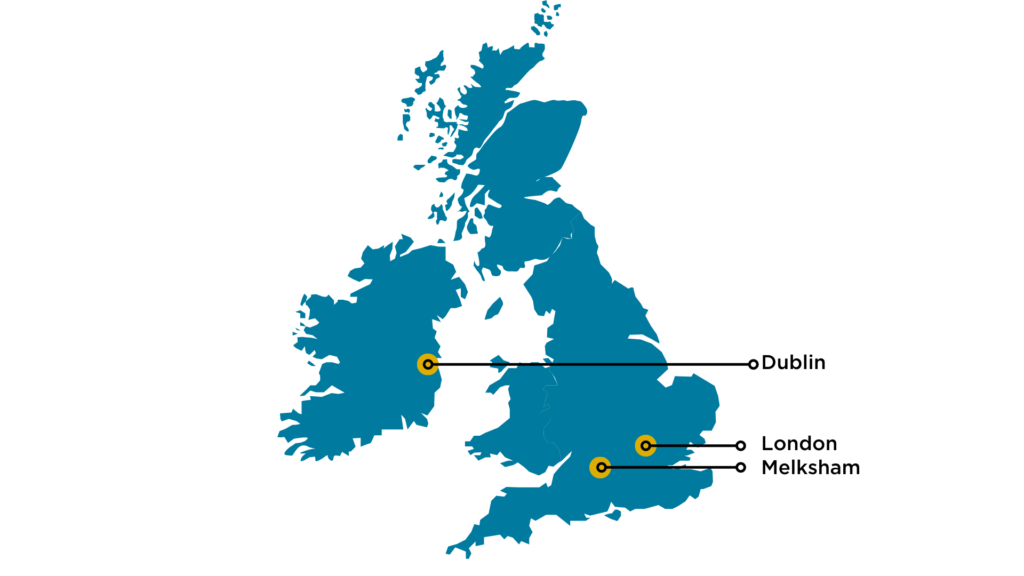
Groups from Delta Ireland, Melksham and London gathered together across 3 days .Between all of the groups, 35 hours were spenton the clean up.15 Delta volunteers gathered 25 bags of rubbish from local waters and land.

Delta Melksham, Matthew G said “It was a good exercise that gives you a sense of achievement and pride in helping protect your local green spaces and community”. And Gavin D. said “It’s amazing the amount of litter that can be found in a relatively small area. Scary to think how much is scattered around everywhere else. Time very well spent!”
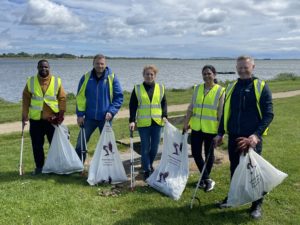
Delta Ireland’s Connor Callinan said:  The Dublin Teams picked rubbish in the nearby picturesque  Malahide Estuary which is  designated a Special Area of Conservation  SAC. The team were  amazed at the range of items  they  collected as it ranged  from plastic bottles to car parts such as oil pumps. They  could really appreciate first hand the negative impact that this would have on the local ecosystem”


Jason Hammond, Delta CEO said: Seeing the difference this activity made to a heavily polluted area I see everyday was really rewarding, and doing it as a team was the cherry on the cake. I’m proud that taking care of our community, is a value shared by many at Delta and I look forward to seeing the positive impact this has.

The Delta Group is proud to be working in partnership with The First Love Foundation in helping thousands of people facing crisis to get their lives back on track.

Their holistic model of support has been cited by the APPG on Hunger and Poverty (2014) as the most effective in tackling poverty anywhere in the UK.

To conclude our International Women’s month series, we’re pleased to share Terene’s inspirational story as told by The First Love Foundation in a one-to-one interview with Terene.

Terene’s world fell apart when she was unable to keep working due to her 9-year-old daughter’s escalating health issues.

The 34-year old scientist is a solo mum who worked as a laboratory chemist. She was commuting for four hours everyday, when her daughter, who has a serious blood disorder called Sickle Cell Anaemia, was also diagnosed with epilepsy.

Her daily seizures meant that Terene had to stop working.

“If my daughter had a seizure, I was two hours away,” she says

“I did the necessary applications and managed to secure a disability benefit for my daughter but I was told that I wasn’t entitled to income support, carers allowance or housing benefit,” she says.

“The security blanket (of work) was completely removed. All of this was new territory to me because I’ve always worked and I didn’t like it. It just felt very uncomfortable.”

By the time she was referred to the First Love Foundation by a partner agency, Terene had been living off her credit cards for 6 months and was facing eviction due to rent arrears.

“I think you need to walk a mile in somebody’s shoes before you start judging them because everyone’s situation is different.”
Terene
Former First Love Foundation Client

Within a week, Through the Advice & Support service, Terene was helped to get all the benefits and support she was entitled to. We were also able to secure a small emergency grant from the local authority to help her get back on track.

“I didn’t know that what I had been told was wrong. If you talk to the wrong person, it can throw you and mess you up. But after speaking to them I felt like I wanted to cry. I felt I was in good hands and I felt reassured,” Terene says. “They are helping people get back on their feet. It’s not just a handout. Unless you are in the situation, you don’t know all the things that are available to you.”

With her rent arrears now cleared, Terene hopes to get a new job in the future but at the moment she is focusing on her daughter’s health.

“I do pride myself on working and getting things for myself. But when you have a child who isn’t 100%, you do have to relook at things and reconsider.”

If you would like to get involved and support this fantastic cause, you can do so by donating to the fund here: Donate money | First Love Foundation

Brief

Kleenex wanted to create an informative campaign, letting consumers know of the  benefits of their Balsam tissues. Poorly noses could rely on the soft balm of  Kleenex Balsam tissues to soothe the skin. Kleenex approached Delta with a need  to create adaptable key visuals that can turn into full promotional kit and artwork  to raise awareness with customers during the Cold and Flu season.

Execution

Using our creative agency’s expertise, we designed key art concepts, emphasizing  the main product features and incorporating the headline “95% of noses said  Balsam protected them from redness”.

We also created various stocker options which display the tissue boxes and smaller  counter-top units for the pocket size packs.

The campaign and final artworks were received very positively by the client  after we collaborated with our Structural Team to create the bespoke items  and make sure they were weight tested before going into stores.

A guide to the Plastic Packaging Tax

Running a business in 2022 isn’t easy. Customers expect a lot. Competition is fierce. And the responsibilities are huge – not least the need to ‘go green’.

Many businesses have already taken steps to reduce their environmental impact. This year, the government is also taking new steps to create a more sustainable business landscape with its new Plastic Packaging Tax (PPT).

This tax is estimated to impact around 20,000 manufacturers and importers of plastic packaging, and will have a significant impact on supply chains. The PPT goes far wider than you’d expect, and there have already been warnings that some businesses could be caught out by the changes.

Our guide to the PPT is here to make sure yours isn’t one of them. Find out what the tax entails, what it means for your business and why embedding more sustainable practises into your organisation is the way forward.

What is the PPT?

If you want less of something, tax it. This tried-and-test principle has been applied to cigarettes, alcohol, and is now being applied to plastics as well.

The PPT is the UK’s newest environmental tax. Set to come into force on 1 April 2022, it applies to any plastic packaging component that has been manufactured in (or imported into) the UK that does not contain at least 30% recycled plastic.

What products will be affected?

According to the government website, the tax applies to finished plastic packaging components. So, what does that mean exactly? A packaging component is a product designed to be suitable for use in the supply chain or by consumers – either alone or alongside other products.

That means it should do one of the following:

  • Contain goods
  • Protect goods
  • Handle goods
  • Present goods
  • Deliver goods

Examples of packaging components include food trays, drinks bottles, coat hangers and reusable and refillable items such as plastic crates. Some items of plastic packaging will be exempt from the tax, for example:

  • Those primarily designed for long-term storage by consumers, such as glasses cases, DVD cases, toolboxes and first aid kits
  • Those designed to be an integral part of the goods sold, such as printer cartridges, tea bags and inhalers
  • Those designed to be reused in the presentation of goods, such as reusable sales display shelves

Find out more about what products will be affected by the Plastic Packaging Tax – and what products will not.

How much is the tax and who has to pay?

The rate of tax will be £200 per tonne payable on all plastic packaging containing less than 30% recycled plastic content. Businesses that are affected will also have to pay additional costs including registration with HMRC, staff training, filing tax returns and storing records.

Where chargeable plastic packaging is manufactured in the UK, the tax will be paid by the manufacturer. Where it is imported into the UK, it will be paid by the person on whose behalf it is imported.

What is the aim of the tax?

The aim of the tax is to encourage businesses to think about their impact on the environment. From being mindful of the materials they use and recycling habits, to the ratio of recycled material used when producing plastic packaging, sustainability is more than just good intentions.

It is estimated that the tax could see a 40% increase in the use of recycled plastic in packaging. That is equivalent to a carbon saving of nearly 200,000 tonnes between 1 April 2022 and 1 April 2023.

Time will tell whether this tax will encourage more recycling or become a burden on businesses who’d rather just pay up.

However, one thing is clear: businesses offering sustainable packaging options will be seen as a more appealing choice for today’s increasingly environmentally-conscious consumers.

How can Delta help?

No one likes paying taxes. But when the aim of a tax aligns with your business’ sustainability strategy, the results could save money and the environment.

Delta Collaborate (part of the Delta Net Zero initiative) is focused on innovation and partnerships for sustainability and economic growth. Thanks to this strategy, we are able to support our clients’ goals and objectives and deliver real change.

Here at the Delta Group, we have an array of sustainable alternatives to the traditional single-use plastic packaging materials. We offer innovative solutions to all of our customers, to help address their environmental needs.

Through our integrated, newly implemented Carbon Calculator, we are able to track, monitor and report a detailed Product lifecycle Assessment of the emissions used for your print, including the total carbon footprint of your packaging. Additionally, our talented purchasing team can advise all clients of the most sustainable solutions available on the market, helping to reduce the use of single-use plastics.

Are you ready to adopt more sustainable ways of doing business? Get in touch with the team today: hello@thedeltagroup.com.

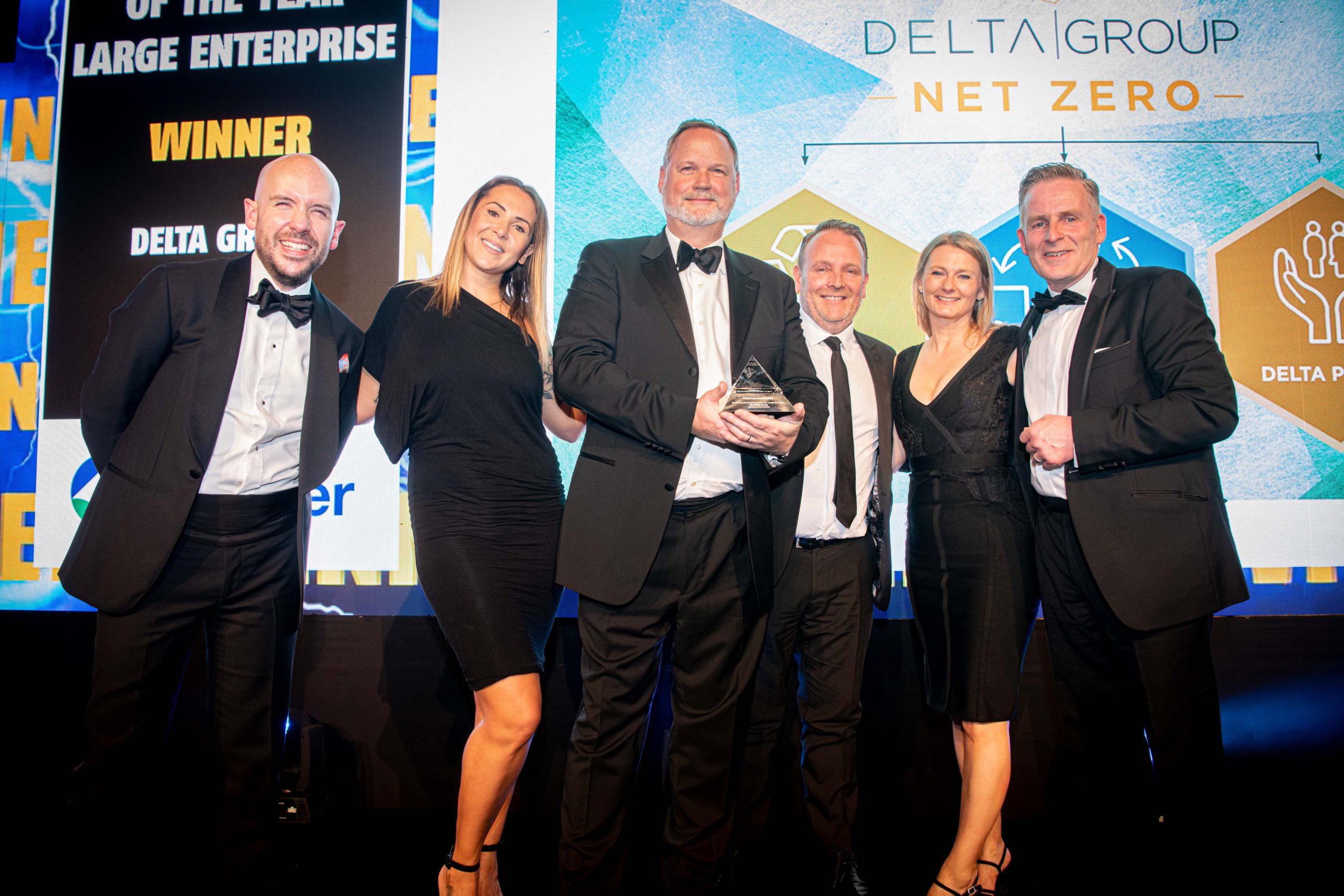
Delta is delighted to have won PrintWeek 2022’s Environmental Company of the Year (large enterprise) for our Delta Net Zero strategy.

We are deeply committed to the ongoing ethical and sustainable treatment of the environment and communities in which we are operating.

We aim to make a positive contribution to society and the environment by advising our clients how to embed sustainable practices into their communications as well as improving our own business practices, and are proud to support Delta Net Zero.

Here’s what PrintWeek’s comments were on DNZ

The company, which employs just shy of 600 people, decided to put in place an ambitious environmental strategy after realising the UK is currently not on track to meet its future emissions reduction targets, In the space of 12 months, it implemented a series of measures including the launch of what it describes as a “sector-first” net-zero dashboard to provide company-wide environmental data. It also partnered with 52% of its clients to execute sustainability audits and action plans and provided carbon calculators to measure campaign emissions. As a result of these measures Delta has reduced its own carbon footprint by the equivalent of 517 tonnes of carbon dioxide. Unsurprisingly the judges were impressed by Delta achieving the “amazing results in such a short time frame. Proof positive of what’s possible when you set a strategy and sell it to the staff.

If you’d like to find out more about how Delta can help you achieve your sustainability goals, and you’d like to arrange a meeting with our sustainability Director Starzeus Hassan-Mcghee, just get in touch at hello@thedeltagroup.com.