Archive for 2021

Home / 2021

The Covid-19 crisis has created a new era of change for businesses. From transformation that’s been a long time coming to the acceleration of pre-existing trends, organisations are being forced to rethink their businesses to meet the new retail norm.

This ‘great acceleration’ has intensified trends that were already underway. Notably, it’s led to consumers being happy buying big ticket items online – something they’d never dream of doing 18 months ago. And that has left retailers wondering exactly what it is they need to do to adapt for the future.

There is no simple fix. The solution is complex and retailers need to tread carefully as they navigate these tricky times. But one thing is clear: the future of retail has to be ‘more’ – more experiential, more customised, more proficient, and more collaborative.

That’s a lot to ask, but retailers are up for the challenge. 

Let’s take a look at those changes in more detail and how retailers can put them into practice.

1 Retail space – big vs small

The flagship store has been a mainstay for retail brands for years. But with high rents and consumers more confident buying online, retailers will move away from these large brick-and-mortar premises and towards smaller retail spaces. To stay relevant, these physical stores will need to focus on customer convenience (operating in an omnichannel capacity) and feature geo-characteristics of the brand (providing different brand offerings depending on the store’s location).

That’s not to say all flagship stores will be consigned to the history books. Those that stay will be fewer in number, but will become destination stores, writes Forbes. They will be more consumer attractions than retail stores, where entertainment, experiences and shows are the main event. Shopping and making a purchase will almost be an after-thought.

2 Greater personalisation

The customer at the centre: it’s the modern retail mantra. Customers want convenience and a smooth route to the right products at the right time. Now, more than ever, physical stores need to harness the power of technology to meet customer needs. 

A personalised in-store shopping experience is largely linked with our local high streets. But with technology, brands can recreate that personalised, localised experience once only found in the village store. Knowing customers by name, understanding their likes and dislikes, and making suggestions based on their preferences is the way forward, but is only an option with the right tech.

3 People – skilled, experienced staff

One way retailers can entice customers back into their stores is through the people they employ. Staff need to be experienced, skilled and able to meet consumer needs to the tee. In 2021 and beyond, working the shop floor needs to be seen as a career (not just a part-time role) – and paid accordingly. 

Focusing less on the number of sales and more on reducing the number of returns, personnel will be able to answer consumer questions and create a memorable retail experience, specific to that shop’s location. After all, the more empathy retailers show staff, the more empathy staff will show customers.

4 Collaborative opportunities

Another way retailers can succeed post-pandemic is by operating more collaboratively. Sharing retail space is not only a smart move financially, it’s one that keeps consumer interest piqued. We’ll see more big-brand collaborations as a way to make the best use of large stores, but this will apply to smaller brands too. Think gyms combined with restaurants, fashion being sold alongside groceries, and more pop-up local market spaces with smaller retailers working together to give consumers a more rounded retail experience.

In 2021, retailers need to give consumers something that’s unique and a break from the norm. Stores that offer something different, surprising and inspiring will get consumers off their sofas and through the doors. That’s going to take some creativity, but the retailers that get it right will find plenty of consumers eager to get back in stores and enjoy the experience that brings.

If you’re looking for new ways to deliver engaging, immersive customer experiences in store and beyond, The Delta Group can help. Get in touch to find out more about our services and solutions.
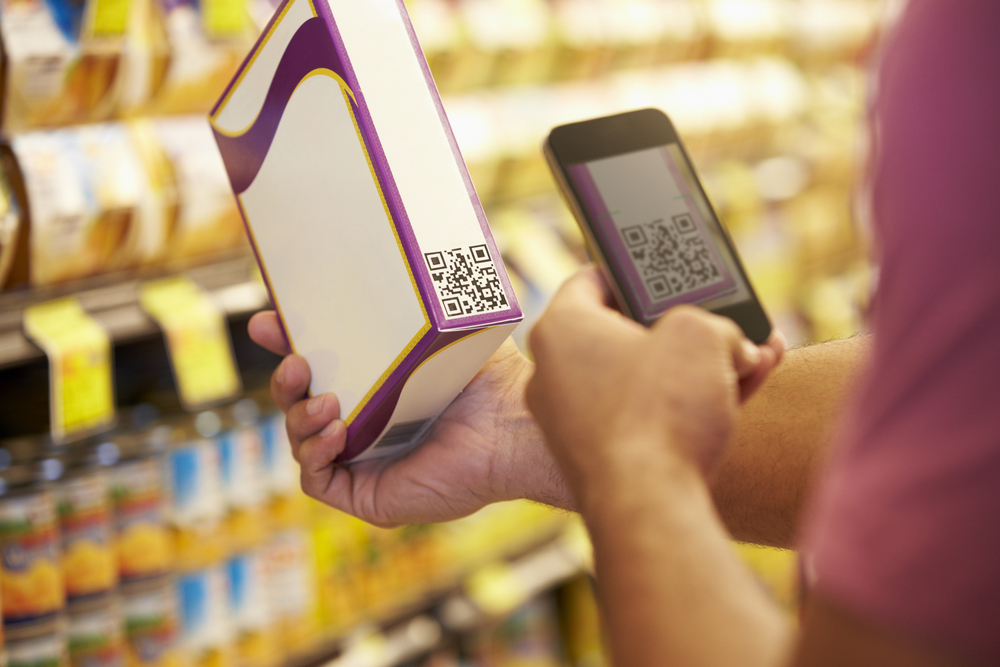
Where there was once the 3P’s of marketing: promotion, price and place, today we have the 1D. More specifically, data.

This is the view put forward in Produce Business, which explains that the huge volumes of data generated, collected and analysed by the food retail sector have just one aim: to maximise profit.

Data is essential in driving key decisions. Within the food retail sector, every single item that is bought, along with the painstaking detail about the sale, is stored in huge databases, along with data collected by the retailers’ loyalty schemes. Added to that you also have data relating to weather, demographics and more. With so much information, it becomes possible to predict when and where a particular customer will next be buying a particular item of food.

Thanks to artificial intelligence (AI), retailers are busy gathering endless product- and price-matching information from competitors’ websites to be stored on a database. They are also using AI to keep check on their own levels of stock and incoming deliveries.

Meanwhile, machine-learning algorithms are able to predict customer demands pinpointed on a more local level. At speeds us humans can only dream of, these programs are able to forecast how many units of a specific product are required and the price they need to be sold at to achieve the greatest profit and the least waste.

Data is also used to decide where a product will get the best traction with the consumer. This data is more focused on A/B experiments that take place in store and by comparisons of consumer buying behaviour.

Suffice to say, when it comes to ordering stock, promotions and pricing, making choices based on instinct is out and AI-driven decisions are in. Which leaves the question: are all food retailers ready to take on the challenge of becoming data-driven organisations?

Not quite. But for every retailer that is hesitant, there is another willing to bet their bottom (line) dollar on data science and AI.

Looking specifically at the fresh produce market, time is of the essence. Crops need to be planted, harvested and on the shelves as soon as possible to guarantee quality and freshness. And that means being able to predict what stock each store needs to maximise sales, at the right price.

In short, data tools allow a company to make smarter decisions and predictions, enjoy a smoother, more efficient process, and see more revenue coming their way.

It’s time fresh produce retailers make the most of these unbiased, analytical insights to gain a crucial edge over the competition.

Find out how your business can benefit from retail insights. Get in touch with the team at the Delta Group today.

Marketing loves a hot trend and ‘retail media’ has become exactly that in 2021, reports The Drum.

With online shopping via websites and apps rising by 80% as consumers look for safer retail opportunities during the coronavirus pandemic, the amount of money being spent by brands to advertise on those sites and apps has also increased.

Even once we move beyond lockdowns and restrictions, there is little doubt that the boom in online shopping (and by association retail media) will continue. It’s now a matter of turning that data into insights and working out how retail media will develop in 2021.

In conversation with The Drum, Michael Greene, VP of Global Product Solutions, Retail Media at Criteo pointed out that while digital has become the primary channel for selling products, the operating costs cannot be underestimated. By selling advertising, ecommerce retailers are able to recoup some of those costs.

Of course, you need to look further back than Covid-19 to trace the roots of this trend. The Amazon effect has had a huge impact on the way retailers do business. Advertisers have always wanted their brands to be seen by consumers at the point of purchase – Amazon showed them how it could be done. And when they get it right, they can better influence consumers at just the right time – and measure the effectiveness of their advertising spend.

Greene explained that retail media is driven by two key factors. Firstly, the ad spend that would have usually gone towards in-store promotions, signage and physical advertising and secondly, the move away from broadcast spend after the cancellation of so many events. The result has been advertisers’ moving their focus towards more measurable media – at least, until physical stores are able to reopen once again.

This growth in online retail is happening across the board – from expensive electricals (previously sold in stores only) to small grocery spends (previously bought on the way home from work). 

To meet these shifts in consumer habits, retailers are offering next-day delivery and introducing more click and collect options. This move towards a more hybrid version of ecommerce can also be seen in an improved app experience in-store to help consumers find what they’re looking for and streamline their purchases.

In short, retail media is at the heart of how we shop now, and in the future. It may not be a new trend, but it’s going to be a big one in 2021.We want to help your business find solutions to the complex and ever-changing challenges you face. See how multi-channel marketing can empower your brand. Get in touch with the team today.

Shoppers want to see brands make a greater commitment to sustainability, according to Fashion Revolution’s latest consumer survey report.

As Drapers Online explains, three quarters of consumers believe that brands should be taking a more vested interest in the lives of the women making their clothing. 

Last year, Fashion Revolution’s consumer report surveyed 5,000 consumers between the ages of 16 and 75 from five European countries (Germany, France, Italy, Spain and the UK). The survey is part of the European Commission-funded Trade Fair, Live Fair project.

The annual survey, which was first published in 2018, has consistently found that consumers are growing increasingly concerned about social and environmental issues within the fashion industry.

According to the 2020 report’s findings, 69% of those questioned were keen to find out more about how their clothes were made. That is a 10% increase compared to 2018’s findings. The research shows that consumers are keen for greater brand transparency so they can make more informed decisions about the clothing they buy.

But it’s not just up to the brands themselves – governments also have a role to play. Seven in ten respondents said they believed it was the responsibility of governments to ensure greater sustainability in the manufacture of clothing. Meanwhile, 71% agreed that governments should make it easier for consumers to buy sustainably-made clothing.

Almost half (45%) said that it was vital that the clothing they bought was not produced using child labour. Additionally, one third (33%) of those questioned said it was important to buy clothing made by people who are paid a fair living wage. Among respondents from the UK, that figure rose to 43%.

Most of those surveyed felt it is important that fashion brands have ethical and sustainability certifications – 72% and 80% respectively. Consumers are also keen to see information about an item’s environmental impact (78%) and the wages and working conditions for people along the supply chain (70%).

At The Delta Group, we are committed to making a positive contribution to the environment and society. As well as constantly working to improve our own sustainability credentials, we advise our clients on how to embed sustainable practices into their own communications.

To find out more about how we can help your business take a more sustainable approach to communications and make positive changes to help protect the world around us, get in touch with the team at The Delta Group. Drop us a line at hello@thedeltagroup.com, We’d love to hear from you.

There’s no denying that 2020 was a difficult year for retail. But for a sector that has faced a huge amount of digital disruption over the past ten years, this is just another challenge to take in its stride.

The headlines love to paint a gloomy picture of the state of the high street, but as long as we need to eat, get dressed and decorate our homes, retail is here to stay. On our high streets and online.

The shift towards online retail is clear. In 2010, ecommerce made up 6.5% of Great Britain’s retail sales. By 2019, that figure had increased to 18.7%. In 2020, the Covid pandemic accelerated that shift to online retail faster still.

The rapid growth in ecommerce has created a host of opportunities for retailers – but it’s been more than just creating an online presence or diversifying into omnichannel retail. Retail’s digital transformation has presented threats and concerns, and given access to trends and transitions.

So, what can retailers learn from the past ten years?

Giving consumers what they want meant investment

Every retailer needs to give customers what they want. Over the past ten years, that has meant greater convenience and an enhanced shopping experience. 

Online retailers are able to offer both, but not without considerable investment. Retailers haven’t simply been able to shift their efforts away from the high street to online. And nor should they. Consumers want the best of both worlds – the ability to shop in physical stores and online. Giving customers what they want means giving them options. 

Over the past decade, retailers have been presented with a dilemma. Diversification, certainly. But how much? Full-blown investment in the online retail space would mean they could capitalize on the opportunity, but it could also mean losing traditional high street customers in the process. The alternative? Keeping with their current offering, but risk losing customers to digital competitors.

For some retailers who made early investment in digital technology, the results were not as favourable as they would have liked. The world of gathering customer data and using insights to inform supply and demand is not easy. But while some companies struggled, others shone.

Personalisation took centre stage

With the rise of Amazon came the scramble for personalisation. But while matching Amazon in terms of convenience is no mean feat, smaller brands had something Amazon lacked – the human touch.

Brands have had to work hard to anticipate and then meet consumer wants and needs. Exceeding customer expectations has meant going further still. Those that have used data insights in the right way have reaped the rewards, building meaningful relationships with customers and increasing loyalty.

By focusing on creating a more personalised offering and blending that with high levels of service, greater convenience and an enhanced experience, retailers have worked out how to use technology as a differentiator.

Taking the concept of personalisation a step further, augmented and virtual shopping experiences have also made their mark on the last decade. These give consumers even more of what they want. The ability to ‘try on’ trainers without going to a shop, or to see how that armchair would look in their living room. 

Giving customers the perfect blend of convenience, immediacy, and a more tangible experience has meant fewer online shopping fails – and less buyer’s remorse.

The demand for greater sustainability

Today, customers are looking for more ethical and sustainable brands than they were ten years ago. Society’s growing awareness of climate change has resulted in more consumers moving towards greener brands. A good product is no longer enough to win consumer favour. Customers want to know about its eco-credentials. 

According to a survey by Hotwire, 47% of consumers want to buy from brands that support their personal values. Top of that list of values? Protecting the environment. Customers want to know how products are made, where they are made and how materials are sourced.

Failing to meet this demand for greater sustainability is not an option. A brand exposed as being unethical, unsustainable or not caring about the environment will face a social media outcry, resulting in reputational damage and a sharp loss of customers.

2021 and beyond

2021 continues to present many of the challenges we’ve seen in 2020, especially in relation to Covid-19.

But if the pandemic has helped retailers at all, it’s by confirming that digital and traditional retail are dependent on one another. Rather than retailers opting for one or the other, they should be used together to give consumers the choice they so desperately want.

In-store retail is still very much alive, but needs to adapt and evolve to offer the kind of personalisation seen in online retail. Customers have missed the ability to enter physical stores, and 2021 could be the year when nostalgia for the great British high street really comes to the fore. 

If you need help delivering engaging, immersive customer experiences at every touchpoint, look no further than The Delta Group. Get in touch today to find out more about our services and solutions.
The year 2020 changed our shopping habits for good – and for forward-thinking retailers, there are plenty of exciting opportunities to embrace. 

The new Shop Safely Survey, from online booking firm Appointedd, shows that customers are welcoming virtual shopping experiences more than ever before.  

Shoppers express enthusiasm for engaging with retailers across several channels, even within a single transaction. This could mean, for example, reserving or buying an item online, then collecting it in person during a specified time slot – cutting queues, and reducing Covid risks. 

As another lockdown forces the retail sector to consider how it can adapt to changing times, it’s encouraging to see that customers are ready to adapt too.

Virtual shopping experiences

One innovative way in which retailers can attract customers is through virtual shopping experiences. The survey suggests that an increasing number of customers are intrigued by these. 

The first Shop Safely Survey, conducted in June 2020 as retailers re-opened their doors after the first lockdown, showed that 20% of respondents were interested in attending a Zoom shopping experience, either alone or with friends. By the time of the second survey, published in December 2020, that figure had risen to 30%.

And it looks as though many of the innovations that retailers are introducing are set to stay. Almost half of all shoppers thought they would not return to their previous level of in-store shopping, even after the pandemic is brought under control. They’re more likely to shop locally, and 70% want online booking for guaranteed entry slots to bricks-and-mortar shops.

So it’s clear that virtual and omnichannel retail will be the big success story of this new era for shops. The challenge now for retailers is how to make this as seamless as possible for customers. 

The Delta Group’s omnichannel service

At the Delta Group, our omnichannel marketing model provides clients with a broad range of impactful visual communications to enable them to seize the opportunities of this new world of retail.

We can help your business identify and utilise the right technologies to enhance the experience you offer to your customers. With our knowledge, skills and tools, your business can deliver a truly innovative and enriching service that meets the needs of today’s shoppers. Contact us today.

On paper, a Covid-driven Christmas didn’t look good for retail. But while the season was unpredictable, the sector fared better than many had predicted.

Here are some reasons why, against the odds, retailers have some reasons to celebrate.

More organised shoppers

One reason to celebrate was that the shape of Christmas trading was different than previous years, reports Retail Week. Rather than last-minute panic buying, consumers decided to get organised.

This was helped by many retailers launching their Black Friday events earlier than usual to encourage customers to start buying earlier.

And many consumers did just that. Driven by concerns about the availability of products and disruption in supply chains, Christmas gifts and groceries were bought in plenty of time, creating a longer, more rounded festive period in sales.

A boost in grocery sales

Some of the biggest Covid Christmas winners were grocery retailers. As many consumers’ festive plans were brought to a halt in the lead-up to Christmas as more restrictions were introduced, supermarkets and food retailers stepped in. A range of festive food to feed smaller gatherings was snapped up in the week before Christmas, as consumers prepared for a very different Christmas.

With pubs and restaurants being forced to shut, Brits kept their celebrations at home. According to data from Kantar, shoppers spent £11.7 billion on groceries during December. 

So what did we eat? Sprouts remained popular, as did cheese, fresh fish, pork joints and alcohol. Not so popular were turkeys and Christmas puddings – an indication of fewer mouths to feed and pared-back celebrations.

Many supermarkets, as well as local independent food stores, saw a boost in sales. Sainsbury’s Christmas grocery sales jumped 7.4%, while M&S boss Steve Rowe said it had delivered a robust Christmas performance “beneath the Covid clouds”. 

Trading moves online

With non-essential shops having to close as tougher restrictions were brought in, retailers with a strong online presence saw sales remain high.

In fashion, party wear took a back seat while sales of loungewear increased. Retailers that were able to modify production according to these different demands had the most success.

According to PwC director Kien Tan: “Covid has taught winning retailers how to […] manage stock better. I don’t think we have mountains of unsold stock this year.”To find out how we can help you create powerful communications that deliver impact and boost sales, get in touch with The Delta Group team today.

With the rollout of the Covid vaccine underway, businesses and consumers alike are searching for the new normal. Technology is advancing at ferocious speed and the pandemic continues to shape consumer habits and expectations.

It’s not easy making predictions during such unpredictable times, but key trends highlighted by Internet Retailing and Forbes suggest how the shopping experience will change this year. Retailers need to be ready. 

Retail spaces become experiential

The physical shop is no longer the final destination in the purchase journey. This year will see a strong focus on a more hybrid retail model – merging the best bits of in-store and online shopping. That could mean customers booking in-store sales appointments to experience a product before ordering online, or retailers driving up engagement through more interactive content – e.g. gamification online or safe, limited access events in-store.

Greater investment in in-store tech

Technology is going to be key in enticing customers back into physical shops. By merging AI with location technology, the in-store shopping experience can become faster, more streamlined and contactless. With new and improved mobile apps, retailers can also offer consumers a more personalised experience – everything from real-time stock checks to instant product collection either from a specific parking space or on entering a store.

Retailers are making larger investments in digital signage, too. The technology can serve a range of purposes – for instance, it can be used for wayfinding, to push store-related or safety messages, or double up as advertising canvasses to display dynamic, targeted ads to customers as they walk around the store.

Voice of consumer input

Companies need to work hard to put the customer first. During these uncertain times, listening to the customer is the best way to anticipate upcoming changes. Voice of consumer input can help inform everything from new products and pricing to marketing. The sooner the retail industry adopts the voice of the customer as standard business practice, the sooner they can start to regain some sense of certainty.

The changing face of the high street

As stores start to re-open, we can expect to see a rise in ‘digital first’ shops – retailers that know what consumers want or prefer (even before the customer knows themselves). Ecommerce is at an all-time high, meaning retailers are looking at ways to repurpose physical stores to help meet the increasing online demand. Whether that takes the form of shop floors turning into fulfilment centres or greater collaboration and sharing of these spaces, businesses will be looking at ways to keep costs down and customer spirits high.

To find out how we can help you create immersive customer retail experiences that deliver impact and boost sales, get in touch with The Delta Group team today.

Some good news from 2020 – the two millionth tonne of Packaging Recovery Notes (PRNs) was traded on 22 December, marking the first time this environmental milestone has been achieved within one calendar year.

As Resource explains, PRNs are certificates demonstrating that a business has recycled or recovered a tonne of packaging, or exported it for recycling overseas. They are traded on the Environment Exchange (t2e) platform, where they are bought by packaging producers as a way of contributing to the cost of recycling their products and reducing the environmental impact of their business. 

The PRN system forms a key part of the Producer Responsibility Obligations (Packaging Waste) Regulations 2007. The regulations apply to companies which manufacture, convert, pack or retail more than 50 tonnes of packaging every year and have an annual turnover of at least £2 million. They cover packaging made of paper, glass, plastic, steel, wood and aluminium.

So, this latest announcement is a real step forward in the drive to make the packaging industry cleaner and greener. 

Locking in prices

The announcement was made by t2e’s Managing Director Angus Macpherson, who said: “Despite a year of challenging market conditions caused by Covid-19, over 2 million tonnes (t) were traded through t2e in 2020.

“A difficult year has seen a 22% increase in Forward trading with participants looking for certainty by locking in prices as well as benefiting from the reduced Forward fees.

“The 28 Day Rolling Market, which launched earlier in the year, has also proved attractive to participants with its extended settlement date, with a total of 148,130t traded. The 28 Day Rolling Market will reopen on the 1st February 2021.

“We would like to thank all our participants for their continued support in these tumultuous times.”

Sustainable packaging and printing

At the Delta Group, we applaud all initiatives aimed at improving sustainability in packaging. What’s more, we can help your company harness the latest trends. 

Take our wide-format, single-pass Nozomi printer. It prints directly onto corrugated materials rather than print and mount, removing process and saving time.

Sustainability principles are always at the forefront of our business. We procure materials from eco-friendly sources with low energy consumption and optimum water usage. We are now also using 100% green electricity. To find out more about our sustainable business model, or our Nozomi printing solutions, contact us today.