Archive for 2021

Home / 2021

With hopes of a summer spending frenzy becoming more of a reality, optimism among UK business leaders has reached a record high.

With non-essential shops and other businesses having opened their doors, research suggests that economic recovery could be broader and faster than previously expected, reports The Guardian.

Research predicts a strong economic bounceback and reinforces hopes that consumers will part with billions of pounds over the coming months.

According to the Centre for Economic and Business Research (CEBR), consumers will spend around £50 billion of their lockdown savings. It has predicted roughly £314 million will be spent in the hospitality sector during the first post-lockdown week alone.

Elsewhere, the Post Office revealed that £590 million was withdrawn during March (the highest figure since September). While a survey of business leaders by Deloitte found record levels of optimism, with expectations of a “strong recovery in profits over the next 12 months”. The Deloitte study also confirmed that forecasts for hiring and investment were at a six-year record high.

The positivity found in these studies is also reflected in findings by the Federation of Small Businesses (FSB), which reported the highest levels of optimism among its members since 2014. The FSB data showed that 58% of small businesses believe their performance will grow during this quarter.

Business activity has quickened its pace over the past three months, according to data from NatWest. Growth was reported in 11 of the 12 UK regions, with Northern Ireland the only region to see a drop.

It was back in February when the Bank of England’s chief economist Andy Haldane described the UK economy as a “coiled spring” ready to explode with the right conditions. An opinion which, at the time, surprised many. 

Since then, the figures have moved in the right direction and Mike Cherry, chairman of the FSB, spoke about the growing optimism, saying: “The certainty provided by the government’s roadmap is filling many small business owners with renewed confidence.”

A study by CEBR highlighted that consumer spending is at the heart of any economic recovery. It estimated that after 12 months of lockdowns and restrictions, consumers have an extra £192 billion to spend.

With money burning holes in people’s pockets, retailers and brands need to maximise every opportunity. Get in touch with the team at Delta Group to find out how we can help you translate optimism into sales.
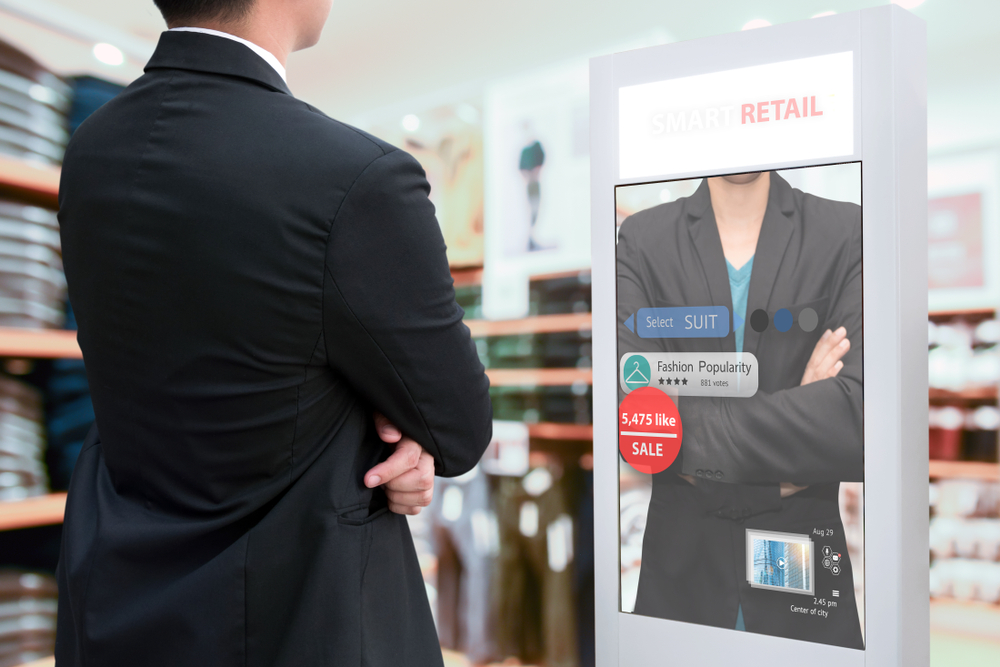
Digital signage is a great way to grab people’s attention. But how do you keep it?

Life is full of distractions, from phones and social media to kids and other people, making it hard to stay focused. Within the retail environment, you have all these distractions plus other brands and retailers vying for customers’ attention.

The secret is knowing how to get the most from your digital signage efforts. Digital Signage Today suggests three tips to get you started.

Beef up your content

The first – and some might say simplest – way to maximise your digital signage is by adding more content. If your signage is only displaying a couple of pieces of content at any one time, you’re not making the most of the digital element.

By creating multiple pieces of content that rotate on a regular basis, you are more likely to display content that appeals and is relevant to your customers. Also, the physical action of the display changing will make people take notice.

Saying that, you can’t just create your content and forget about it. If you want it to be effective, you’ll need to keep it fresh and up-to-date. Think about information that will be the most useful, relevant, and significant to the audience.

Add audio into the mix

Visuals are good. But the combination of sound and visuals is even better, elevating the customer experience up a notch or three. By appealing to the ears as well as the eyes, you’re making content that is instantly more interesting.

Adding audio could mean anything from playing videos alongside your content, to adding audio on top of advertising content to help customers locate products in the store. 

However, try not to get too carried away with the audio element. Too much noise could become yet another distraction and annoy customers. Think carefully about the location of the signage, the space you are working with, and volume levels.

Entertain: Give people what they want

Digital signage isn’t just about selling items, it’s something that helps you connect with your customers. If the sole purpose of your signage is to push sales messages to your customers, they’ll soon become bored. 

Instead, you need to entertain. Think about the hook and the narrative, keeping videos short (TikTok-style), and integrating with social media and other user-generated content.

At Delta Group, we can help you create digital signage content that gives your customers exactly what they want. Get in touch to find out more.

Retail has a role to play in the battle against the climate crisis. The move towards greater sustainability is not just the right thing to do, it can also help retailers stay relevant and give them an edge over the competition.

Retail and fashion have long been linked with waste. Unfortunately, for good reason. According to research by McKinsey, by 2030 the industry’s greenhouse gas emissions are predicted to increase by almost a third.

Unibail-Rodamco-Westfield’s How We Shop: What’s Changed study looks at how the pandemic has changed the future of retail, and the need for more sustainability in the sector is a key finding. The research reveals that 49% of consumers want to buy locally-sourced products.

The study also shows that sustainability is an ongoing focus for both shoppers and retailers. Well over half (57%) of UK consumers said they would be more mindful of their online purchases due to the distribution and packaging impact on the environment. Meanwhile, 84% are interested in renting products (such as technology, furniture, clothes and fitness equipment) rather than buying them.

It’s statistics like these that reaffirm the need for fashion companies and retailers to revisit their strategies and place renewed energy into their sustainability efforts.

If you’re looking to make sustainability part of your corporate DNA, here are four trends to watch this year and beyond.

1. More environmentally friendly, more ethical

The move towards more sustainable products is here to stay. It’s what consumers want from brands, and the information is being made readily available in the public domain. Sustainability reporting covers everything from carbon footprints to fair wages – and this information is there for all to see. Brands and retailers that fail to meet consumer sustainability expectations risk a backlash on social media.

2. Products need to be durable

Fast fashion has come up against a fair amount of criticism over the past few years, but throw-away culture is becoming a thing of the past. More consumers are looking to buy products that will stand the test of time. 

Cheap and cheerful is out; quality, value and durability is in. On paper, this might sound like it’s a recipe for fewer sales, but that may not be the case in practice. Retailers need to understand their customers, identifying how they make purchasing decisions and offering the products that match those requirements.

3. Innovation in materials + exceptional customer service

Make no mistake: a materials revolution is underway. No longer the preserve of niche markets, innovative fibre technologies and materials science have gone mainstream. Companies are keen to produce the most sustainable materials possible – and the levels of investment in this area is testament to that.

As materials become more sustainable, brands are able to extend their commitment to sustainability further still. From long-term guarantees to unlimited free repairs, forward-thinking brands are going out of their way to exceed expectations in terms of customer service. They are doing this by using sophisticated sourcing processes, integration from supply chain to customer service, and streamlined data management.

4. Greater personalisation

Customers are also looking for more personalisation in their journey to purchase. According to research by Epsilon and GBH, 80% of online shoppers are more likely to make a purchase when brands offer personalised experiences. This ties in perfectly with the sustainability movement, with customers turning their backs on mass-produced items in favour of quality, more individual products. However, achieving this level of personalisation isn’t easy. With huge scope for error in production, digital innovation is vital to ensure operational intricacies are realised.

At Delta Group, we help businesses of all shapes and sizes make sustainability part of their corporate DNA. To find out how we can help your business join the green revolution, get in touch with the team today.

For months, online retailers have had the edge over their bricks and mortar counterparts. Fast service, 24/7 purchasing, and home delivery have become the norm for many shoppers. Consumers have learned to adapt under Covid-19 restrictions with non-essential retail stores closed.

However, now that non-essential high street retailers are back to welcoming shoppers through their doors, the playing field will level out once again. Customers who turned to ecommerce during the pandemic are returning to the high street.

Take Primark as an example. With no ecommerce channel, the company has announced losses of around £1.1 billion in sales over the past six months. But pent-up demand is strong and the retailer expects a robust boost now stores are open.

Meanwhile, online giants such as Asos and Boohoo Group have accelerated their offerings and capitalised on the high street’s losses during the pandemic. Topshop has relaunched on Asos, and Boohoo Group snapped up Debenhams, Dorothy Perkins, Wallis and Burton.

We’ve seen acquisitions galore, yet ecommerce is never going to be able to replicate the customer experience of physical stores. Browsing, picking up items, trying out products, enjoying face-to-face customer service, and benefiting from interactive services: these are experiences you can get in-store only.

The spring budget held more good news for bricks and mortar stores, with an extension to the business rates holiday. 

Richard Johnson, co-founder of social commerce app MyStreet, said that consumers were keen to get back to the high street. Ongoing restrictions over the summer might mean shopping trips become more of an ‘occasion’, but, he predicts the transition back to physical stores will cause a decline in ecommerce sales – in the short term at least.

He added: “Digital transformation has accelerated and so it’s quite likely that a year on from non-essential shops being open, we’ll see a new way of shopping that sees much more of a balance between online and physical shopping.”

The high street was already struggling prior to the pandemic, so it’s vital retailers offer a consistent customer experience both online and in-store. Engaging customers will be less about new product offerings and more about investing in marketing to sell to a wider audience and stay ahead of the competition. By focusing more on the customer experience and enhancing the physical aspects of the consumer journey, retailers can give customers the convenience, interaction and journey to purchase they desire. 

At Delta Group, we can help you better connect with your customers and take the consumer experience to the next level. Get in touch to find out more.

New research has revealed that UK consumer confidence is on the up, thanks to the rapid rollout of the Covid-19 vaccine, reports Retail Gazette.

The GfK consumer confidence barometer has shown a significant improvement in consumer confidence during March this year, with people getting ready for a restriction-free (and hopefully pandemic-free) future.  

According to the research, the score jumped seven points to -16. This marks the third consecutive month the score has risen in 2021 and is the highest reading since the coronavirus crisis impacted consumer sentiment. 

The score has also risen higher than previous forecasts by economists who were polled by the Wall Street Journal. Their prediction was that the barometer would only increase to -20 in March. 

Consumer confidence has been given a boost for a number of reasons. Sentiment about personal finances has increased by six points, and there is a growing feeling of hope for the economy over the coming 12 months, which rose by 13 points on the scale.  

When the pandemic first hit the UK in 2020, consumer confidence plummeted. However, over the last two months the indicator has gained more than half the ground it lost at the start of April last year – and with the vaccination continuing to be rolled out, the hope is that this upward trajectory will continue. 

Speaking about these findings, GfK’s client strategy director Joe Staton said: “Spring is in the air on the back of well-received Budget announcements, the successful vaccine rollout and roadmaps in place for ending lockdown.” 

Staton noted that all five measures making up the consumer confidence barometer had increased from February. 

He continued: “If this improved mood translates into spending, it might help reverse some of the economic damage the UK has suffered.” 

At Delta, our multi-channel marketing services help empower brands and retailers to connect with consumers and give them the confidence they need to start spending. Get in touch with the team to find out more.

The coronavirus pandemic has accelerated a decade’s worth of ecommerce growth into just 12 months. As a result, brands are facing a new reality.

Direct to consumer (DTC) is part of this new reality, and some DTC-focused brands are doing better than others. But contrary to what you might think, there’s more to DTC success than just being digital first. It’s the brands that are shifting the nature of DTC away from purely ecommerce towards lifestyle and building long-term relationships that are thriving.

After all, if an experience helps someone reach their goals, it’s going to be more memorable than one that doesn’t, argues The Drum.

A year of lockdowns and restrictions have seen many people learning new skills and taking up new hobbies. For brands, this opens up a range of opportunities to tap into those aspirations by creating experiences with greater meaning.

Whether someone’s new-found passion is for coffee, crochet or cooking, there’s a DTC brand waiting in the wings to inspire that individual (and deliver a simple, seamless experience, of course). Here’s how they’re doing it.

Enriching the retail experience

The secret to DTC success is letting products find the customer – not the other way round.

That means curated collections and in-feed experiences served up direct to potential customers via social media channels. By doing so, you’re placing products in front of customers before the intent to shop has even formed.

And there’s an argument to say the more unexpected these placements are, the better. Live streaming on platforms such as TikTok, for example, allows you to tap into certain passions (fashion, dance, food) and present products within a relevant context but also seemingly out of the blue.

Taking fulfilment to the next level

Fast delivery and easy returns are deemed essential by most shoppers. Unboxing experiences are rife. But packaging also offers a simple way to differentiate yourself from the competition. Connected packaging merges the digital with the physical. By scanning a QR code on a parcel, customers can connect with content that helps them get the most out of a product.

Sustainability is an issue that many consumers hold dear, so even just the simple process of collecting empty packaging can help you align your values with those of your customers.

Collaborating to connect passion points

The collective power of a community is a force to be reckoned with. If you can tap into that power, you can create word of mouth marketing opportunities unlike any other.

Brand collaborations are nothing new, but they are becoming more unpredictable in DTC and connecting different passion points. Nike’s collaboration with Momofuku, a noodle bar popular with the skate community, tapped into the passion points of this community, while Colgate’s collaboration with Supreme created a toothpaste designed to appeal to a younger audience.

Using an intelligent feed to tailor content

Creating frictionless retail experiences requires an in-depth understanding of customers. First-party data allows brands and retailers to mine insights and create experiences across the funnel.

Building an intelligent feed on your website allows that data to be captured and tailored content – based on customer interactions – to be surfaced.

At Delta Group, we deliver technology to help you achieve your strategic DTC goals and create memorable experiences. Get in touch with the team to find out more.

The Covid-19 pandemic might have given the retail industry a shake up, but it hasn’t weakened it as much as some people would have you believe.

Lockdowns and social distancing measures may have caused a shift from physical stores to ecommerce, but once the uncertainty of the pandemic has passed, traditional shopping is expected to make a comeback, reports The Drum.

According to a study by Activate Consulting, physical retail will generate £16 trillion in sales by 2024 compared to £5 trillion by ecommerce. That’s over three times more sales in bricks and mortar shops than online over the next three years.

Saying that, advances in technology will continue to disrupt shopping patterns, so retailers and brands need to take an innovative approach to their marketing. As well as transparency, data ownership and customer privacy issues, brands will also need to focus on emerging concepts – for example, store intelligence planning.

So, what is ‘store planning intelligence’ exactly? The idea is that when it comes to planning campaigns, brands should give as much attention to understanding their physical store locations and customers as they do to their data-driven targeting efforts.

That’s because understanding your audience can only go so far. Your ideal customer might live 30 minutes’ drive from your store and persuading them to make that journey is never going to be easy. But with store intelligence planning, you can flip things on their head, using data science to work out which local areas have the highest number of your audience targets.

The result is more comprehensive knowledge of the ‘physical’ reach of your retail outlet. Where your audience lives, works, commutes, and how far they are willing to travel to purchase from your store gives retailers crucial store mapping information.

No more wasted hours trying to persuade a specific target audience segment to visit your shop (when in truth, they can never be convinced). And instead, efforts go into targeting customers with the highest affinity and the right mobility to make the trip in-store.

We can expect a rise in store intelligence planning over the coming years, not just among retailers, but across all verticals. Used responsibly, location data can help create stronger, more personable brands and give a clearer picture of who customers really are.

As we move away from uncertainty, retailers and brands need to make the most of omnichannel evolution and innovate. Making store intelligence planning an integral part of data-driven marketing will help brands optimise against future changes.

What that means in practice is that store intelligence can help you create a quality customer experience for customers as they browse and purchase. It can inform targeted, engaging content that is displayed on in-store digital screens, providing interactive, personalised messages and an in-store experience customers will want to make the journey for.

At Delta, we can help you manage the content for your in-store digital screens. Get in touch with the team to find out more.

Over the last few years, convenience retailers have shown increasing levels of interest in installing packaging-free refill stations. But faced with the coronavirus pandemic, any potential rollout of such figures suddenly became low priority, reports The Grocer.

Concerns about cross-contamination pulled the plug on progress when the UK’s first lockdown came into effect in March last year. However, the tide could be turning.

According to Gary Kemp, co-founder of Zero Waste Refill Hub, some retailers have renewed interest in packaging-free features. Not only has Kemp reported a rise in the number of leading retailers that have installed the stations in recent months, he has also seen a 60% increase in enquiries from convenience retailers.

He puts this down to retailers looking for new opportunities to enhance the customer experience: “When we came out of the initial lockdown, it gave retailers confidence to keep the momentum going.”

He continued: “Retailers are planning the future of their stores, and the switched-on retailers are always looking to add to their business.”

Two stores that have recently installed packaging-free dispensing stations are Nisa retailers Filco Supermarkets in South Wales and LA Foods in Edgware.

Speaking about the decision, Filco’s managing director Matthew Hunt said: “This is part of our sustainability drive and the overall package we’re trying to promote.” Meanwhile, LA Foods has described its new hub as a “real talking point” for customers.

Kemp explains that retailers are primarily expressing interest in dispenser stations rather than scoop bins as they offer less risk of cross-contamination and traceability issues.

Another retailer to have taken the plunge into packaging-free stations at three of its sites is the Heart of England Co-op.

Heart of England Co-op food general manager Steve Browne said that despite some concerns about usage during the pandemic, the stations are being used well and sanitation units are helping boost customer confidence.

Browne also recognises the role packaging-free stations play in the shift towards greener retail solutions and added value: “Not only do these fit within our desire to drive a more sustainable future, which is one of our operating mantras, but these are also useful during a recession as customers can buy as much or as little as they like.”

The past 12 months have created a number of challenges in the move towards a more sustainable future. However, it’s essential that brands stay focused on the issue and embed it into business practices. 

At Delta, we can help you embed sustainable practices into your communications. We’re also committed to improving our own sustainability credentials. From 100% green electricity and eco-friendly printing presses, we’re always seeking out sustainable alternatives.

Get in touch with the team to find out more.

The UK is the third most-shopped market in the world for international online purchases, reveals a new report from global ecommerce firm eShopWorld (ESW).

Trailing behind only China and the US, The Global Voices 2021: Cross-Border Shopper Insights report revealed that 20% of non-UK consumers have purchased from UK retail sites over the past 12 months.

Of those surveyed – namely, more than 20,000 consumers from eleven countries – 59% said they had purchased from online brands or marketplaces in China. Meanwhile, 51% revealed they had shopped via US ecommerce sites.

According to the research, the top five global markets for UK cross-border shopping were: Australia (37%); the US (29%); Germany (26%); France (24%); and Singapore (23%).

The report also revealed other markets that had made fewer online purchases from the UK but present significant opportunities for UK retailers looking for ways to recover from the impact of the Covid-19 pandemic. These emerging markets include: Mexico (6%); Russia (8%); Chile (10%); Turkey (16%); and Canada (17%).

Speaking about the findings, ESW’s CEO Tommy Kelly pointed out how desirable British brands and products are to consumers from around the globe.

Kelly stated: “Our survey data shows that people are increasingly embracing international ecommerce as more retailers and brands eliminate friction.” He said retailers were doing this “by offering convenience within the buying journey, and adding capabilities such as click and collect, return to store and guaranteed delivery date.”

With restrictions still in place and travel opportunities limited by the pandemic, people are using cross-border ecommerce as an alternative to shopping in person around the world.

The report revealed that while shoppers in Russia, Mexico and Turkey are not using UK ecommerce sites to make purchases on the same scale as other markets, they are spending the most on cross-border purchases each year.

If UK brands and retailers are willing to invest in these emerging markets, the rewards could be significant. As Kelly explains: “Retailers need to offer localised shopping experiences where ecommerce customers in these markets feel as if they are receiving the same level of service and convenience they would enjoy if shopping locally.”

As Europe’s leading visual communications specialist, we deliver multichannel international marketing services to our clients, allowing them to tap into new markets quickly and effectively. Get in touch with the team to find out how we can help grow your brand internationally today.

CarbonQuota who offer carbon certification, reduction and offsetting services has awarded the Highly Commended prize to The Delta Group , the UK’s leading visual communication specialist. With operations across multiple sites in the UK and ROI Republic of Ireland, Delta came out ahead of several of their competitors. They demonstrated how they are turning words into action via their Delta ZERO programme, which aligns its operations to key sustainable development goals from the UN and creates a model for them to create value for customers by helping them achieve their sustainability objectives.

Dean Smith Chief Sales & Marketing Officer for The Delta Group  said “We’re naturally thrilled to receive recognition of such an important initiative for our Group. Delta ZERO aligns to nine of the UN’s sustainability goals, which we are actively tracking, but equally has a customer focused approach to engage through our Delta Collaborate pillar, delivering long-term measurable value against our client’s sustainability goals. Thank you, CarbonQuota.”