
Archive for November, 2021

Home / 2021 / November

The Delta Group announces the appointment of Danni Murray to support their Film & Entertainment future growth strategy.

Film Ents & Games Experience

The Delta Group, Europe’s premier visual communications specialist delivering dynamic multi-channel marketing services to brands, retailers, and studios across the globe, announces the appointment of Danni Murray as Divisional Managing Director of their Film, Entertainment & Gaming Division.

Track Record

Danni joins from Warner Bros where he was VP – Media, Digital & Marketing Partnerships for the last 18 years. Danni will be responsible for maintaining and developing Delta’s long-standing sector expertise and delivering the growing demand for Delta’s multi-channel proposition in print, creative, digital, social, and experiential activations.

Reactions

Danni Murray said, “Delta’s reputation in the Film and Ents industry is second to none, and I have experienced first-hand their focus on customer service and innovation. I am delighted to be joining Delta at an exciting stage of their journey and look forward to working closely with our Film and Entertainment clients and partners to accelerate our growth and multi-channel proposition.”

Jason Hammond, CEO of the Delta Group, said, “We are delighted to announce the appointment of Danni Murray as MD of this vital side of our business. To appoint an individual of Danni’s calibre, reputation, and media / multi-channel experience is testament to Delta’s go-to-partner position in the Film and Ents market. We are looking forward to working with Danni to help us maintain our standards and navigate our next phase of growth and demand.”

At Delta, we help film & game clients, retailers and brands create a more interactive, engaging, and personalised customer experience. To find out how we can help your business attract customers to movies and online, say hello: hello@thedeltagroup.com.
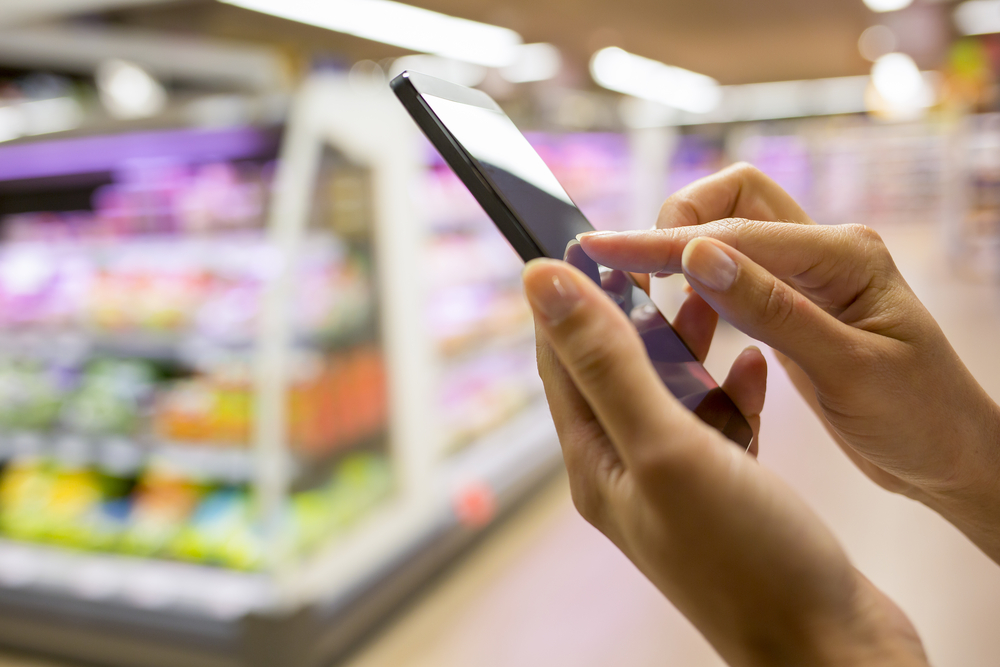
In our ongoing quest to find the new normal post-pandemic, one thing is clear: physical retail has changed forever.

Numerous brands have already been forced to close their doors for good since the start of the pandemic. Others may still follow suit.

If retailers are to convince shoppers to leave the comfort of their sofas and step back into brick and mortar stores, they need those retail spaces to provide a totally unique experience. 

The ‘Covid effect’ is still very much front of mind for retailers and brands, but that’s not the whole picture. Consumers have been expecting more and more from physical stores for a number of years. All Covid has done is accelerate that pace of change.

Success now depends on a retailer’s ability to adapt. More specifically, whether they can create the kind of unique experience that will make consumers want to head back to the high street.

The in-store experience

Retailers need to enrich the consumer experience – and omnichannel has been big news for the past decade. Shoppers want ease and convenience. They want to be captivated. And they want to have a personalised experience that centres on human connection.

This means that the act of walking into a physical store needs to be an enriching experience in itself. There are plenty of ways retailers can achieve this. For example, interactive sales kiosks can inform, entertain and help customers compare products. Link them to a mobile app and they start to gamify the in-store experience, too.

And the list goes on. Simulators, connected mirrors and interactive entertainment take the in-store experience up a level, engaging shoppers and encouraging them to linger for longer.

A personalised environment

Retailers also need to seek ways to personalise the brick and mortar store experience. Customers are looking for a one-to-one relationship with a brand; one that is consistent and seamless across all channels.

Major retailers have adopted something called ‘clienting’ to enhance customer relationships. For some, that has meant equipping staff with tablets so they can pull-up data on customers’ preferences and shopping behaviours and offer more personalised advice.

Personalising the in-store experience in this way adds real value and cannot be replicated in the virtual space. Staff are able to make real-time recommendations that boost sales value and customer satisfaction in equal measure.

However, clienting does not come cheap and significant investment is required, but the rewards are there for the taking.

The hands-on human connection

The post-pandemic retail recovery strategy may be fairly tech-centric, but that’s not to say it can replace the human element. If anything, the biggest USP of brick and mortar stores is the hands-on human experience a customer gets while they are there.

In-store staff need to be seen more as advisors or personal shoppers. And they should be able to access the kind of in-store technology that enhances their skill set and allows them to guide shoppers on their retail journey.

Retailers also need to consider the in-store experience from the customers’ perspective via surveys, research and first-person shopper experience.

At Delta, we help retailers and brands create a more interactive, engaging, and personalised customer experience. To find out how we can help your business attract shoppers through the door, get in touch with the team today. Say hello: hello@thedeltagroup.com.

Bricks and mortar stores will have a new role to play in the post-pandemic retail environment. According to research, retailers are planning to reimagine their physical stores as online fulfillment channels as part of their post-pandemic recovery strategy.

The Transforming the Physical Store for a New Shopping Landscape whitepaper, carried out for Sensormatic by IDC, reveals that retailers are increasingly prioritising their bricks and mortar stores. Almost eight in ten (76%) retailers said their physical spaces have become more crucial in customers’ buying journeys due to the pandemic. As a result, retailers are seeing stores more as experiential and fulfillments hubs than simply high street shops, reports 365Retail.

As part of their post-pandemic recovery plans, 71% of retailers have altered the layout of their stores in order to create a more joined up approach. This means click and collect, contactless, and self-service technology have all become more commonplace in stores both on the high street and in retail parks. Meanwhile, 49% are now using a section of their physical retail spaces for omnichannel fulfilment. 

According to the whitepaper, the predominant priority for retailers today is ‘ship from store’ –  something that also features among retailers’ top four priorities over the coming 24 months.

Speaking about the findings, Filippo Battaini, research manager at IDC Retail Insights, Europe, said:  “The pace of transformation in retail is accelerating as retailers respond to a new shopping landscape. The Covid-19 pandemic has fast-forwarded this process.”

He continued by explaining that retailers are starting to rethink their processes to enable “an effective response to fast-changing expectations from increasingly demanding, technology-savvy and time-crunched consumers”.  

As a result, Battaini continued, the role of bricks and mortar stores is no longer simply a sales channel. Instead, these spaces are being primed to play a much bigger role in retailers’ operations.

Increased demand for ecommerce during 2020 has meant retailers are not just looking at boosting their click and collect capabilities. They are also considering dark store retail formats. Previous research shows that 84% of consumers are keen to continue using dark stores post-pandemic.

The question now is whether retailers will be able to keep apace with consumer demands and expectations in this area. There is clearly still some way to go, with research revealing many click and collect customers experiencing either long delays or out-of-stock items.

Consumers are shopping less frequently in physical stores, but are making those trips with more purpose. Product availability and the speed and accuracy of fulfillment are crucially important.

At Delta, we help retailers and brands leverage insight from their customers and make the most of sales opportunities. To find out how we can help your business better engage with your customers, get in touch with the team today: hello@thedeltagroup.com.

The retail environment is evolving at breakneck speed. With more products available at the lowest prices, and customers holding an increasing amount of purchasing power, retailers have had no choice but to look for new and effective ways to set themselves apart and remain competitive in the market. 

There’s no doubt that the industry over-saturated. Retail sales have risen sharply since the start of the pandemic, meaning it is harder than ever for retailers to find and retain customers. But it’s this customer loyalty that can so easily make or break a company. 

Now more than ever, retailers need to do what they can to stand out from the crowd and build meaningful relationships with their target audience. And the way to do this, reports TotalRetail, is through a highly personalised customer experience (CX). For those retailers that get their personalisation strategies bang on, the rewards are that truly magic combination of more sales and happier customers.  

But personalisation these days doesn’t come easy. Restrictions on personal data and the use of third-party data have left many retailers scratching their heads about how they can benefit from dynamic personalisation in practice. 

To find answers to those questions, we need to take a step back and seek out the potential gaps in retailers’ knowledge surrounding personalisation and CX. Here are three ways retailers can create a more positive customer experience through personalisation. 

1. Making the most of social media 

Social media allows businesses of all shapes and sizes to connect with their audience at the click of a button (or two). But while the potential is huge, actually making the most of what is on offer is no easy task. The challenges come thick and fast. Collecting valuable customer data requires a lot of time, attention and the right tools. Putting that data to good use, while ensuring customers continue to trust the brand requires even more time and energy still. 

QR codes and unique landing pages are just two of the ways companies can capture first-party data from social media audiences and use personalisation to create hard-to-resist retargeting opportunities. Brands and retailers need to remember to offer clear ‘value exchanges’ as part of this process. In other words, they offer special offers, discounts on certain items, or limited-time deals in exchange for their customers’ valuable data. 

The typical social media user may follow numerous brands on different platforms. However, they will usually only engage with a handful. The reason for that is the lack of truly customised content. To stand out from the crowd, brands can start targeting their subscribers with tailored, personalised campaigns and messages. With the right content in place, real engagement can become a reality. 

2. Empowered retailers = empowered customers 

However you’re capturing customer data, what you do with that information next is what really matters. This will determine whether you gain value from the data – gleaning insights from it to empower your brand. 

Personalisation isn’t just about pushing messages or products based on what a customer has previously bought. Instead, it is about communicating with individuals on a one-on-one level, demonstrating the respect your brand has for its customers and showing you understand their reasoning behind a purchase. 

Retailers need to understand the customer journey in order to maximise sales opportunities and enhance customer experiences. Understanding customers’ online behaviour is a good place to start. By tracking discarded baskets and mapping which channels your customers came from you can better tailor your offering and empower your customers. This can help build loyalty and make the purchasing journey more enjoyable. 

3. Joining up the digital and in-store experience 

Retailers now need to work hard to make online and in-store customer experiences as seamless as possible. In-store shopping offers customers the chance to handle products, pay on the spot and take items away with them. Online shopping offers ease, speed and convenience. Both have their advantages, but it is only by encompassing online to in-store and in-store to online that retailers can streamline the processes and boost the likelihood of a sale. Bridging this gap and building customer confidence involves strategies such as retargeting, in-store digitisation and loyalty programs that are activated both in-store and online. 

At Delta, we help retailers and brands leverage effective personalisation strategies to create a positive customer experience and drive sales. Find out how we can help you stand out from the crowd. Get in touch today: hello@thedeltagroup.com.

In recent years, retailers are giving more control to their in-store shoppers. Interactive digital screens and self-service options make sense from a retail perspective, but what do customers think about this digitisation of physical stores? 

According to research, it seems consumers actually prefer this do-it-yourself approach to in-store shopping, reports Digital Signage Today.  

A key finding of the Reflect survey – focusing on consumer shopping preferences, the influence of in-store signage, and time spent in physical stores – revealed that 46% prefer the DIY shopping experience they get with self-service kiosks and digital screens. 

Over eight in ten (83%) of those questioned believe that informative digital screens can save them time during in-store shopping excursions. Meanwhile, 75% said they would be more likely to shop in bricks-and-mortar stores if those retail spaces had interactive screens with product information, location, product comparisons, and reviews. 

The report acknowledged that the pandemic has pushed retail technology innovation to new levels, suggesting that digital transformation had been fast-tracked by as much as five years in some industries. 

With people becoming more comfortable about working online, this sentiment is spilling over into their buying habits. There has been a marked rise in the number of people using ecommerce channels to make purchases. The report also flagged that 60% of people prefer to buy products via websites – a figure that has remained fairly static over the past few years. 

All of this is good news for ecommerce, but the report doesn’t spell all doom and gloom for physical retail stores…

Getting customers back into physical stores might be easier than we think 

According to the report: “Almost all consumers say the right technologies could lure them back to the physical location.”  

While there are plenty of benefits to shopping online – convenience, quick price comparison, user reviews, and not having to deal with sales associates – that doesn’t mean customers won’t return to physical stores if the right in-store technology was available to them.  

The survey showed that if retailers take the time and effort required to adapt the things customers enjoy about online shopping and deliver them in physical stores, online customers will happily step back through the doors once again. 

A lot of that comes down to the tactile nature of in-store shopping. As the report states: “There’s something about being able to touch a product – to hold it, to see its size, to feel its weight, to inspect its quality – that consumers crave.” 

According to the report’s findings, 67% of shoppers miss the parts of the in-store experience that are impossible to recreate online.  

Today’s customers are looking for more elements of the digital shopping experience to be featured in store. In particular, they want quick information, price and product comparison data, and customer reviews. And contrary to being hesitant about self-service technology, they positively embrace it. 

Of the survey respondents who do the majority of their shopping online, almost half said that “informative, interactive displays would be the most enticing feature for them to shop in person.”

Digital signage is no longer a nice-to-have – it’s an absolute must-have 

The findings of the report confirm what many have known for some time. If retailers want to grab customers’ attention and get them back through the door, digital signage has to be a top priority. 

As the report states: “Among young shoppers, those 18 to 44 and most likely to shop online, digital screens were noticed exactly as often as print signage.” 

Not only does digital signage offer opportunities for retailers to reconnect with existing customers in-store, it also presents exciting opportunities to capture new shoppers, too. 

Of the respondents who said digital signage was the most noticeable in-store feature:

  • 87% would shop more in person if stores had interactive screens that provide product information, comparisons and reviews 
  • 90% preferred stores that don’t require them to interact with store employees  
  • 50% would be more likely to shop in store if retailers offered self-service options 
  • More than 90% feel that digital screens would save time during their shopping visits 

Millennials want a more digitised in-store experience 

Unsurprisingly, it is millennials who are the biggest drivers of change in in-store shopping. But they don’t just want any change, they want change driven by the right technology. 

This goes against the widely held view that says physical retail spaces are losing younger generations. Younger customers are still willing to shop in bricks-and-mortar stores – as long as those stores meet their expectations. 

The report found that 80% of millennials would rather shop at stores that offer self-service. Meanwhile, 80% of shoppers aged 30 and under would prefer to shop in person if a store provided product information, comparisons and/or reviews on digital screens. This figure is starkly different to the 14% of under 30s who said customer service was a reason to shop in-store. Instead, they’re looking for technology the moment they step through the door. 

However, the report warns that even though most purchasing still takes place in-store, retailers cannot afford to become complacent. It explains that online shopping will continue to grow and retailers will be forced to adapt. 

If you’re looking for ways to make your physical retail space more appealing to customers, Delta can help. Delta Signage can transform the in-store experience and differentiate your brand. Get in touch to find out more: hello@thedeltagroup.com. 

The current COP26 summit, which has brought together thousands of world leaders and delegates to discuss solutions to the global climate crisis, has been the ideal host of Conservation International’s new global out of home (OOH) campaign. 

As Digital Signage Today reports, ‘Hear me while you can’ aims to encourage leaders and individuals to acknowledge the disastrous consequences of climate change. Across the fortnight, digital screens displaying the campaign are calling on people to ‘stop and listen to the beautiful sounds of nature’. 

People can use their devices to scan QR codes embedded within the screens, which takes them to the conservation.org/HearMe page. From there, they can listen to sounds of nature from places around the world, including the North Pacific Ocean, South African savannah and Amazon rainforest. They are also able to discover more about the work Conservation International is undertaking in order to protect nature. 

The campaign also follows the Convention on Biodiversity (COP15) event which took place prior to COP26, where governments made an agreement to increase investments in initiatives designed to safeguard biodiversity. 

In a company press release, Dr. M. Sanjayan, CEO of Conservation International, said: “Nature isn’t just something that is beautiful to see and hear – it is essential in the fight to slow climate change, to our very survival. 

“The science on this is clear: if we don’t invest in stopping the destruction of nature, we will fail to avert climate catastrophe – even if we get everything else right.” 

Nature is capable of contributing at least 30% of global action needed to prevent the most severe effects of climate change. However, initiatives centred around protecting, managing and restoring forests, peatlands and mangroves currently only receive less than 3% of total global climate funding. 

‘Hear me’ draws inspiration from ‘Nature is Speaking’ films that Conservation International released with MAL/FOR GOOD back in 2014. The campaign’s tagline, ‘Nature doesn’t need people. People need nature’, reinforces the message that saving nature is ultimately about saving ourselves.

Clear Channel is supporting Conservation International’s campaign by donating digital screen ad space across markets in Europe, Asia and the Americas.

The campaign supports Clear Channel’s pledge to utilise OOH’s power and potential reach to amplify one of today’s most important issues: climate change. 

If you’re looking for ways to become more sustainable in your business operations, we’re happy to  advise you. Get in touch with our experts today: hello@thedeltagroup.com.